ARC Foundation Story
ARC: The Origin of Automated Augmentation
ARC was an early expression of Industry 4.0 logic in telecoms: a physical automation concept revealing the need for one operational truth, accurate inventory, controlled execution and closed-loop improvement.
ARC — Autonomous Robotic Capability — was the physical-world Industry 4.0 expression of a strategic automation blueprint, applied through robotic cross-connect automation. That blueprint has become the foundation and catalyst for today’s Automated Augmentation.
ARC was denied the opportunity to establish the operational ecosystem it promised. The business case and emerging technology path revealed the wider ecosystem possibilities: a robotics-enabled telecoms model connecting physical network state, service-path control, field activity, inventory accuracy, operational process, commercial outcome and continuous improvement.
Its deeper principle was simple but powerful: one operational truth. Physical network state, digital records, work execution and service outcome should not exist as disconnected fragments; they should operate as a governed, feedback-driven system.
Operational disciplines
Not isolated benefits — one operational chain
ARC was my early attempt to connect physical network automation with the operational disciplines that determine real service performance: proactive inventory, test and diagnostics, fault reduction, fault prevention, rapid provisioning, improved quality of service and, ultimately, customer satisfaction.
The significance of ARC was not limited to the mechanics of robotic cross-connect activity. Its deeper value sat in the operating model it exposed: accurate inventory enabled better diagnostics; better diagnostics supported fault reduction and prevention; reduced manual intervention accelerated provisioning; and faster, cleaner execution improved service quality.
This is the pedigree behind Automated Augmentation. The terminology has changed — Industry 4.0, digital twins, AI-assisted orchestration and governed automation — but the operational problem has not.
Historical artefacts
Architecture, prototype and business-case evidence
ARC is part of my professional origin story. These artefacts show that the work was not slideware and not a retrospective response to the current AI cycle. The architecture, prototype evidence, benefits mapping and financial modelling all point to the same underlying thesis: physical network automation, inventory integrity, operational control, customer experience and commercial discipline belong in one connected operating model.
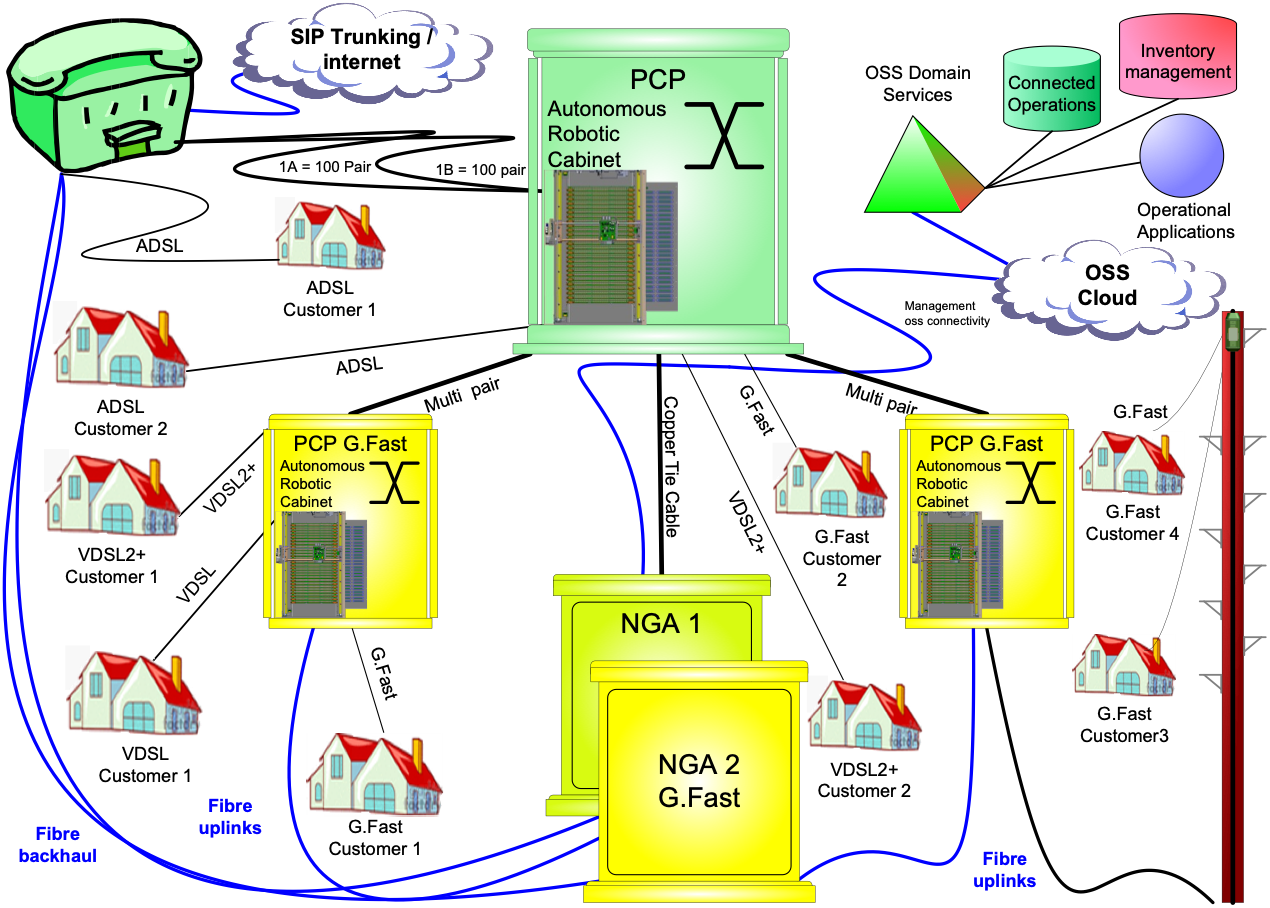
Historical ARC architecture schematic

Historical ARC access-network architecture artefact showing autonomous robotic cabinet capability within a hybrid copper/fibre transition model, linked to OSS cloud, connected operations and inventory management. The significance of the diagram is not only the network topology shown, but the operating model it points toward: physical automation, operational visibility, inventory integrity and controlled service execution.
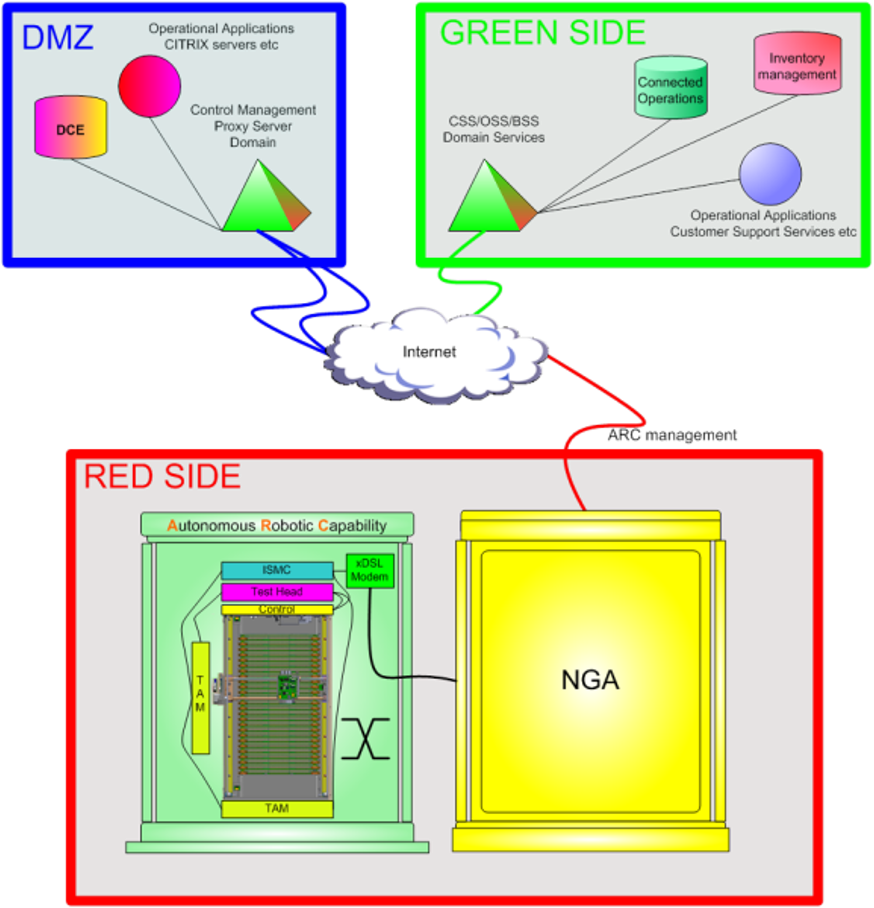
ARC domain integration schematic

Historical ARC domain integration artefact showing how autonomous robotic capability was being considered within a wider operational architecture: DMZ separation, green-side operational applications, inventory management, connected operations and red-side physical access-network control. The significance of the schematic is that ARC was already being framed as a governed system integration model, not simply a standalone robotic cabinet.
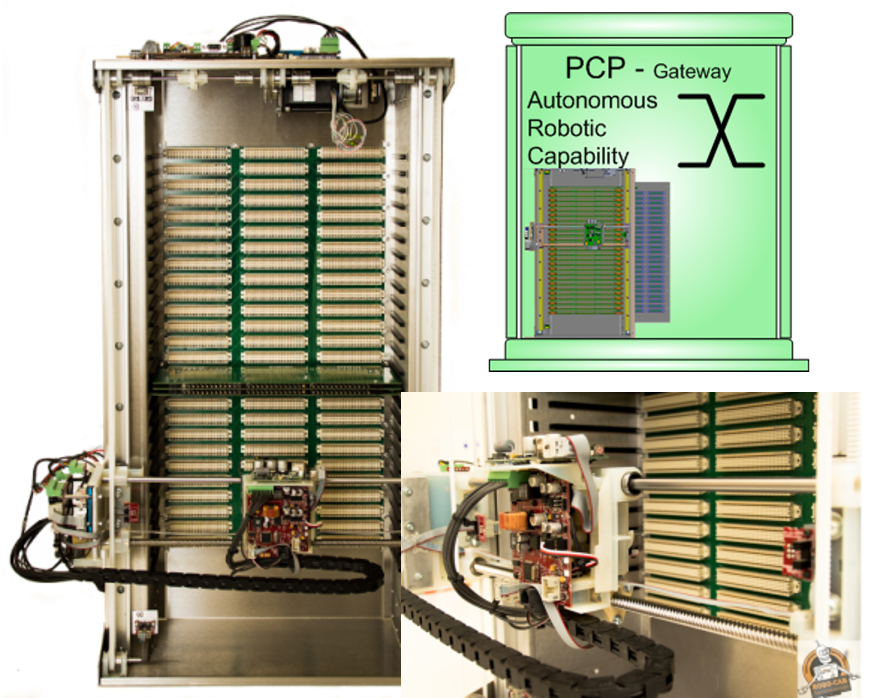
From concept to prototype

Historical ARC prototype artefact showing the autonomous robotic cabinet and close-up internal mechanism. The image demonstrates that ARC progressed beyond architecture and business-case modelling into practical physical implementation.
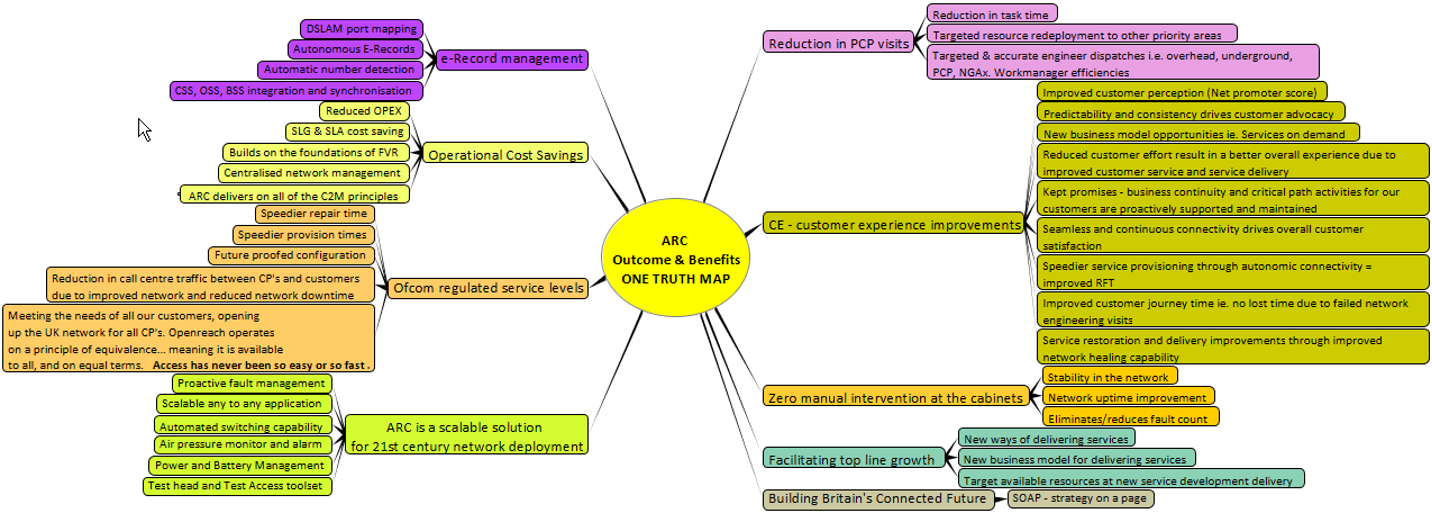
ARC benefits map and operating model

Historical ARC benefits-map artefact showing how Autonomous Robotic Capability was intended to radiate benefits across the operating model: proactive inventory, test and diagnostics, fault reduction, fault prevention, rapid provisioning, improved service levels, operational savings, customer experience and future service growth. Its significance is that ARC was already being framed as the centre of a connected operational ecosystem, not as an isolated robotic cabinet.
Operational benefits and financial discipline

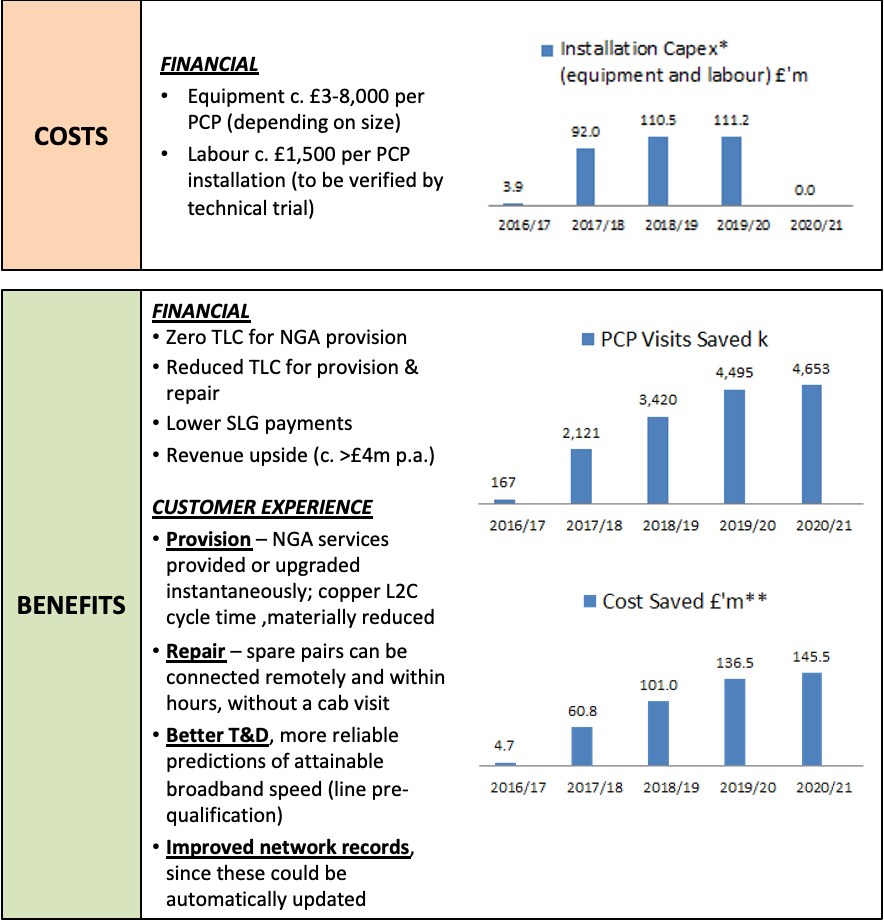
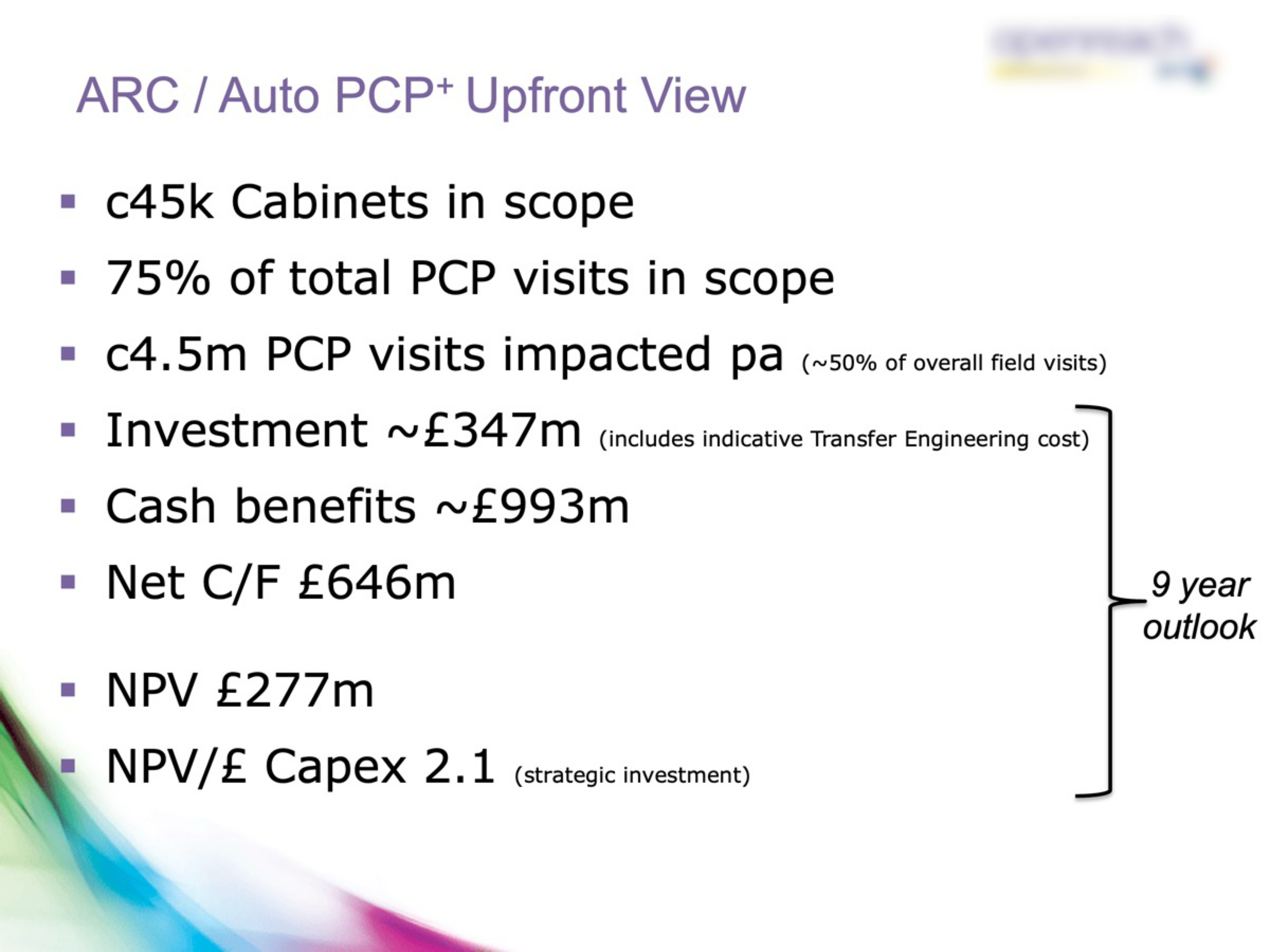
Historical ARC financial and benefits modelling showing installation investment, cabinet visits saved and operational cost reduction. The artefact is significant not only for the figures shown, but for the discipline it demonstrates: ARC was being assessed as a measurable automation economics model, linking physical intervention reduction, provisioning speed, repair efficiency, network-record improvement and customer experience.
Self-funding assessment logic

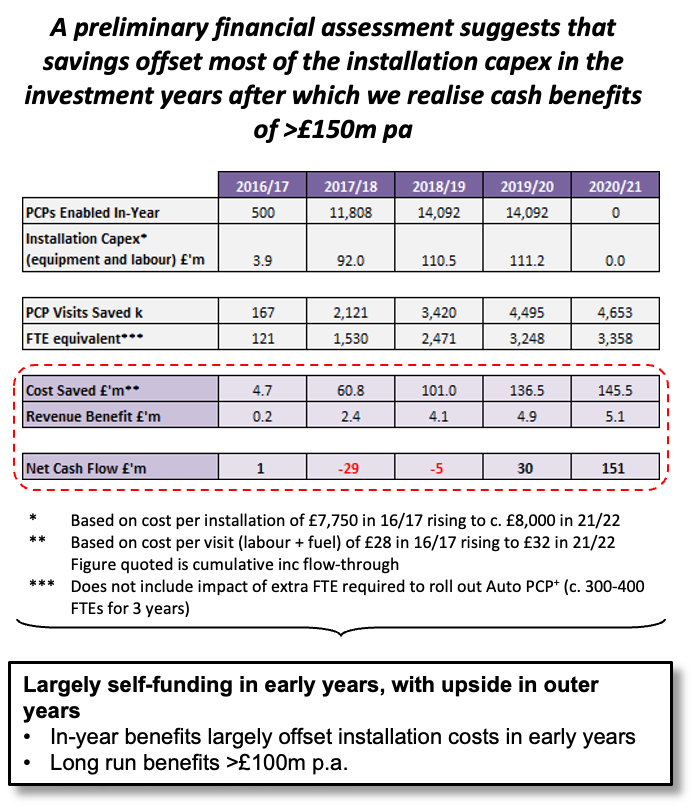
Historical ARC financial assessment artefact showing rollout economics, visits saved, FTE impact and net cash-flow progression. It demonstrates that ARC was being considered as a commercially grounded automation model, not simply a technical proposition.
Infrastructure foresight
The direction of travel was already visible
The ARC business case was not only concerned with automating cabinet intervention. It recognised a broader infrastructure pressure: digital demand, service growth, power consumption, physical network capacity, operational cost and customer experience were beginning to converge into one systemic challenge.
At the time, the immediate pressure was broadband, online video and access-network growth. Today, the same structural issue is amplified by AI, datacentre expansion and energy-intensive digital infrastructure. The lesson is consistent: the answer is not simply more capacity. It is better governed, better represented, more automated infrastructure.
That is why ARC remains relevant. It was an early attempt to connect the physical network, inventory truth, diagnostics, provisioning, fault prevention, service quality and commercial discipline into one operational model. Network Automation xGx carries that direction forward into Industry 4.0 network automation, digital-twin-aligned operations, AI-assisted orchestration and governed Automated Augmentation.
Historical deck insight
In 2015, the ARC business-case material was already framing digital demand as a future power, capacity and infrastructure economics challenge. The modern AI power debate makes that pressure more visible, but the underlying infrastructure problem was already present.
Metallic Origins
ARC began with the practical problem of automating physical metallic cross-connect activity and reducing avoidable manual intervention across telecoms infrastructure.
Operational Ecosystem
The deeper value was not robotics in isolation. It was the ecosystem logic: inventory, process, provisioning, repair, planning, field-force activity, estate efficiency and commercial control working as one system.
Augmentation Continuation
Automated Augmentation now extends the same logic through AI-assisted orchestration, digital-twin-aligned representation, governed execution and feedback-driven improvement.
The ecosystem ARC revealed
The stated objection was that copper infrastructure was becoming defunct. That view missed the strategic point. Copper was the immediate context; operational automation was the enduring strategy.
Broadband continued to depend heavily on copper for a long period, and the savings available from ARC could have helped underpin the business case for fibre transition. Rather than treating copper decline as a reason not to automate, ARC showed how legacy-network efficiency could have helped fund and discipline the move toward future infrastructure.
Beyond removing manual touch points, ARC exposed the wider value of accurate data, inventory integrity, cleaner process flows, field-force coordination, estate rationalisation and measurable business-case discipline. In fibre environments, the same ecosystem logic becomes increasingly virtual, data-led and process-driven.
Closed-loop lineage
ARC was the physical origin. Automated Augmentation is the closed-loop continuation.
From ARC to Automated Augmentation
The ARC artefacts show a consistent pattern: architecture, prototype work, operational benefit and financial modelling were all being connected into one automation thesis. This was not technology for technology’s sake; it was an attempt to reshape the economics, control and reliability of network operations.
The opportunity was not executed at the time. But the direction of travel remains clear. Network Automation xGx carries that strategic logic forward into AI-assisted orchestration, digital-twin-aligned representation, Industry 4.0 operational systems and governed Automated Augmentation.
Return to current Network Automation xGx proposition